Sunken, uneven concrete is a trip hazard and an eyesore — but you don't have to tear it out. We lift and level slabs with injected polyurethane foam in hours, not days.
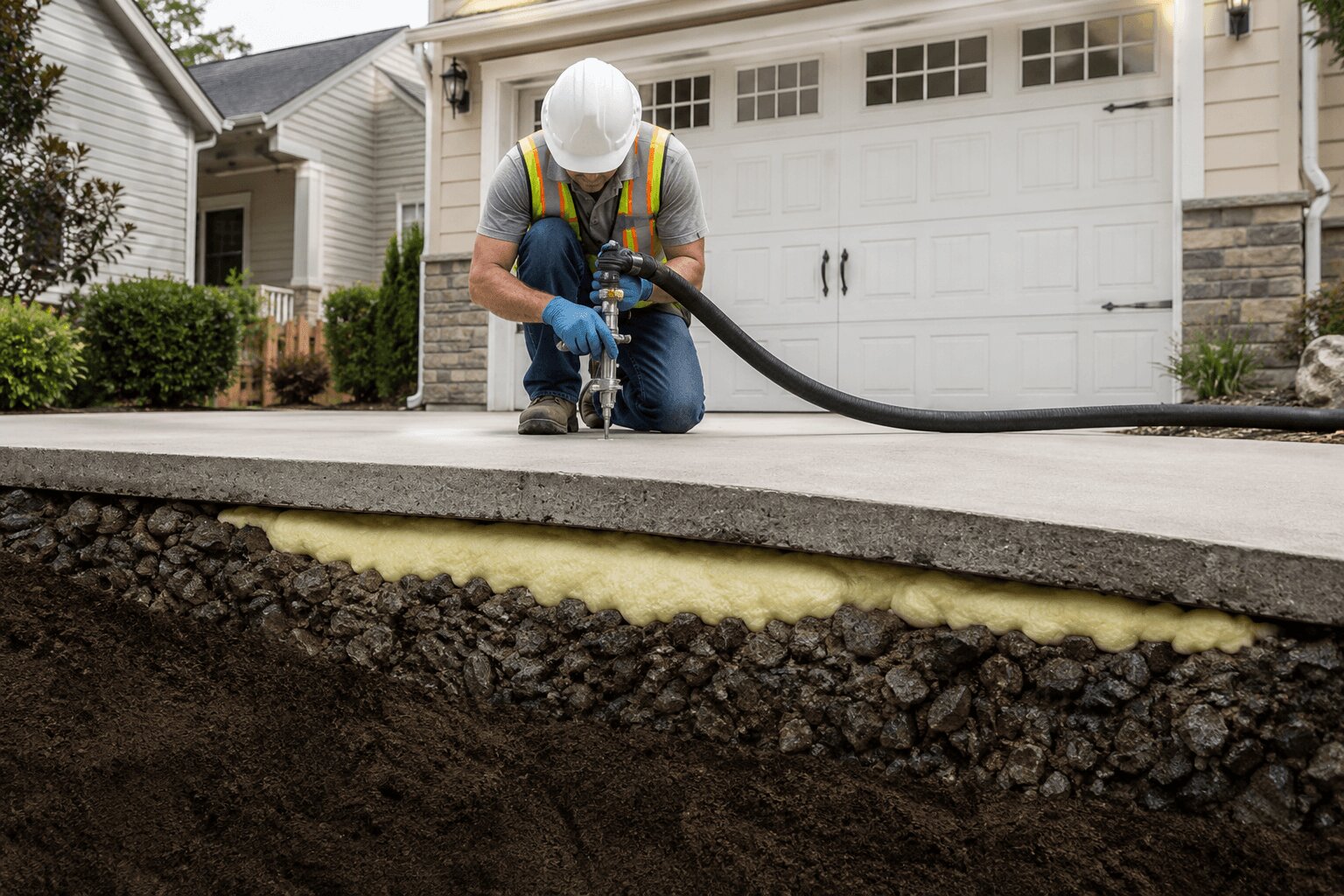 🏗️Photo: Concrete leveling in Rock Hill, SCReplace this file with your photo — keep the same filename
Uneven, sunken concrete is a problem nearly every Rock Hill homeowner recognizes — a driveway slab that's dropped at the seam, a patio that now slopes toward the house, a garage floor with a dangerous lip, or a sidewalk panel that catches everyone's toe. It happens because the soil beneath the slab washes away, compacts, or shrinks during dry spells, leaving voids that the concrete eventually sinks into. The slab itself is usually fine; it's the support underneath that failed. That's why you don't need to demolish and repour — you need to fill the void and lift the slab back into place.
Modern concrete leveling uses high-density polyurethane foam, a method that has largely replaced the old, messy "mudjacking" process. It's faster, cleaner, longer-lasting, and far less disruptive — and in most cases the slab is ready to use the very same day.
We drill a series of small, dime-sized ports through the sunken slab. Through these ports we inject expanding polyurethane foam, which flows into the voids beneath the concrete, fills them completely, and then expands to gently and precisely raise the slab back to level. Once the slab is in position, we patch the small ports and the job is done. The foam cures within minutes, is completely waterproof, and won't wash away or break down over time the way soil or older slurry materials can.
We raise and stabilize virtually any residential concrete: driveways, garage floors, patios, pool decks, walkways, porches, steps, and interior slabs. Beyond the obvious safety and curb-appeal benefits, leveling a slab that slopes toward your home also redirects water away from your foundation — which helps prevent the very water intrusion and settlement problems that lead to bigger foundation repairs down the road. It's a small fix that protects a much larger investment.
Concrete doesn't sink because the slab is bad — it sinks because the ground beneath it gives way. There are a few common culprits in the Rock Hill area. Erosion is the biggest: water from downspouts, poor grading, or plumbing leaks washes away the soil under the slab, leaving an empty void. Poorly compacted fill soil from when the home was built will continue to settle for years. And our expansive clay shrinks during dry spells, pulling support out from under the concrete. Whatever the cause, the fix is the same — fill the void and lift the slab — but identifying the source matters, because if water is washing the soil away, we'll also point you toward the drainage correction that keeps it from happening again.
Catching sunken concrete early is worth it for another reason: a slab that has dropped and cracked will keep breaking apart under normal use, and once a slab is severely fractured, lifting may no longer be an option and full replacement becomes the only path. Leveling it while it's still intact preserves the concrete you already paid for.
If you've got concrete that's sunken, cracked at the joints, or sloping the wrong way, call (803) 990-3003 for a free inspection. We'll measure the drop and give you a free written estimate to lift it back to level.
Tell us what you're seeing and we'll schedule a free, no-obligation inspection — usually the same week. Prefer to talk now? Call or text (803) 990-3003.
Catch it early and save thousands. Call now for your free inspection.
📞 (803) 990-3003